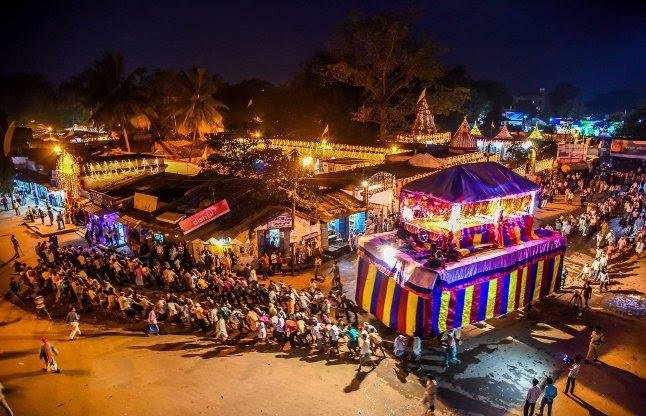
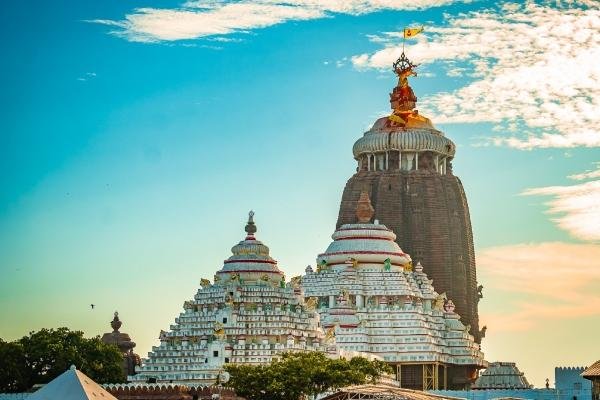
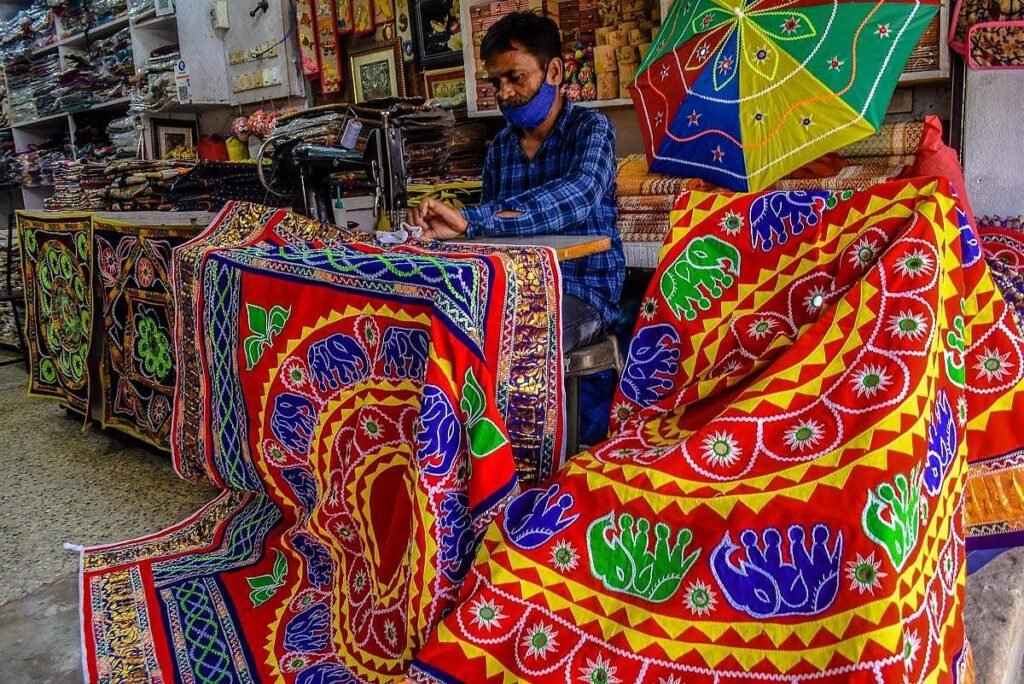
Drive to Puri visiting 64 Yogini, Dhauli, Pipli & Konark Sun Temple. Afternoon Visit Puri. Overnight at Puri. 64 YOGINI TEMPLE HIRAPUR:- 64 Yogini Shrine at Hirapur built during the 9th century to harness the supernatural powers, only four architecturally distinct 64 Yogini Shrines survive in India now. Two of them are in Orissa - at Hirapur near Bhubaneswar, and the twin villages of Ranipur and Jharial. The other two 64 Yogini Shrines are present in Khajuraho and Jabalpur in Madhya Pradesh. Constructed as a hypaethral structure. The temple is a circular structure, 30 feet in diameter, which is built of coarse sandstone and has barely 8 feet high walls containing 64 niches to house the sculptures of Yoginis or Dakinis (2 feet in height). There are 7 more katyayanis on the outer perimeter wall. It was a temple open to the sky, with a small platform in the middle with four pillars. The inner perimeter wall had small Yogini statues made of black Chlorite. DHAULI:- Ashoka had a special weakness for Dhauli, where the battle was fought. The Daya river is said to have turned red with the blood of the many deceased after the battle, and enabled Ashoka to realize the magnitude of horror associated with war. He got abodes excavated for the recluse, instructions inscribed for officials, expounded the main principles of dandaniti for the public, provided special status to his new kingdom including the stupas at Dhauli. The Rock Edicts found here include two separate Kalinga Edicts. In Kalinga Edict VI, he expresses his concern for the welfare of the whole world. The rock-cut elephant above the Edicts is the earliest Buddhist sculpture of Odisha. The stone elephant shows the animal's foreparts only, though it has a fine sense of form and movement. On the top of the hill, a dazzling white peace pagoda has been built by the Japan Buddha Sangha and the Kalinga Nippon Buddha Sangha in the year 1972. PIPLI:- Applique comes from the French word 'appliquer', which means to 'put on'. In applique, one piece of fabric is placed over a base layer and is sewn in place. Another technique is the reverse applique, in which one layer of fabric is placed on another layer, and a shape is cut out from the top layer, exposing the lower layer. These two are then neatly stitched together. The applique craft reached its peak in the 11th century AD, under the patronage of the king and nobility. A craft that originated as a temple art now finds its application in a wide range of household, decorative and ceremonial products. This handicraft is unparalleled in its flexibility and versatility, permitting experimentation and encouraging innovation. Artisans with their skilful blending of myths, symbolism and imagination provide the craft an appealing dynamism. The appliqué items are mainly used during processions of the deities in their various ritual outings. Items like Chhati (umbrella), Tarasa – a heart-shaped wooden piece covered by appliqué cloth and supported by a long wooden pole and Chandua – an umbrella shaped canopy are usually seen during the processions. 'Jhalar', another popular item is a sort of frill which is used as a border to canopies and also independently as a decorative piece. SUN TEMPLE, KONARK:- One of the most stunning monuments of religious significance, A true masterpiece of architecture proudly stands in the form of Sun Temple at Konark. Here the language of stone defeats the language of human. The Sun Temple of Konark, often called as the Black Pagoda, Built in 13th century by King Narasimhadeva-II, of the Ganga Dynasty, the temple is designed in the shape of a colossal chariot with seven horses and twelve wheels, carrying the sun God. It is an ample testament to the artistic glory of the time. Conceived in the form of a huge chariot drawn by seven spirited horses on 12 pairs of exquisitely decorated wheels--after the mythical seven horse chariot of Sun God--the temple was unique in its architecture and implementation. Afternoon walk near to Puri Temple to see the Flags put at the Top of the Temple. That is only Once in a Day & a Special Group of people Climb from outside the Temple to the top to Put the Flags (Many).